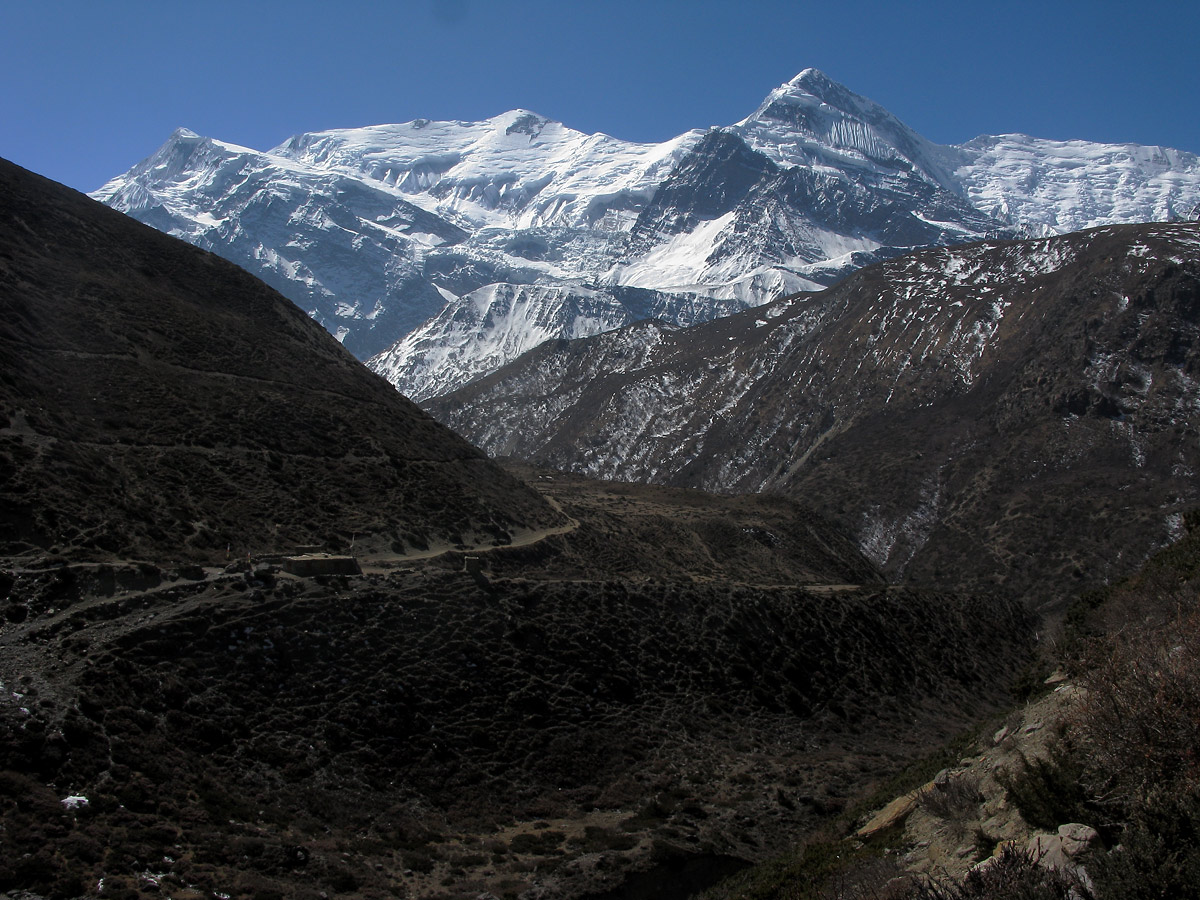
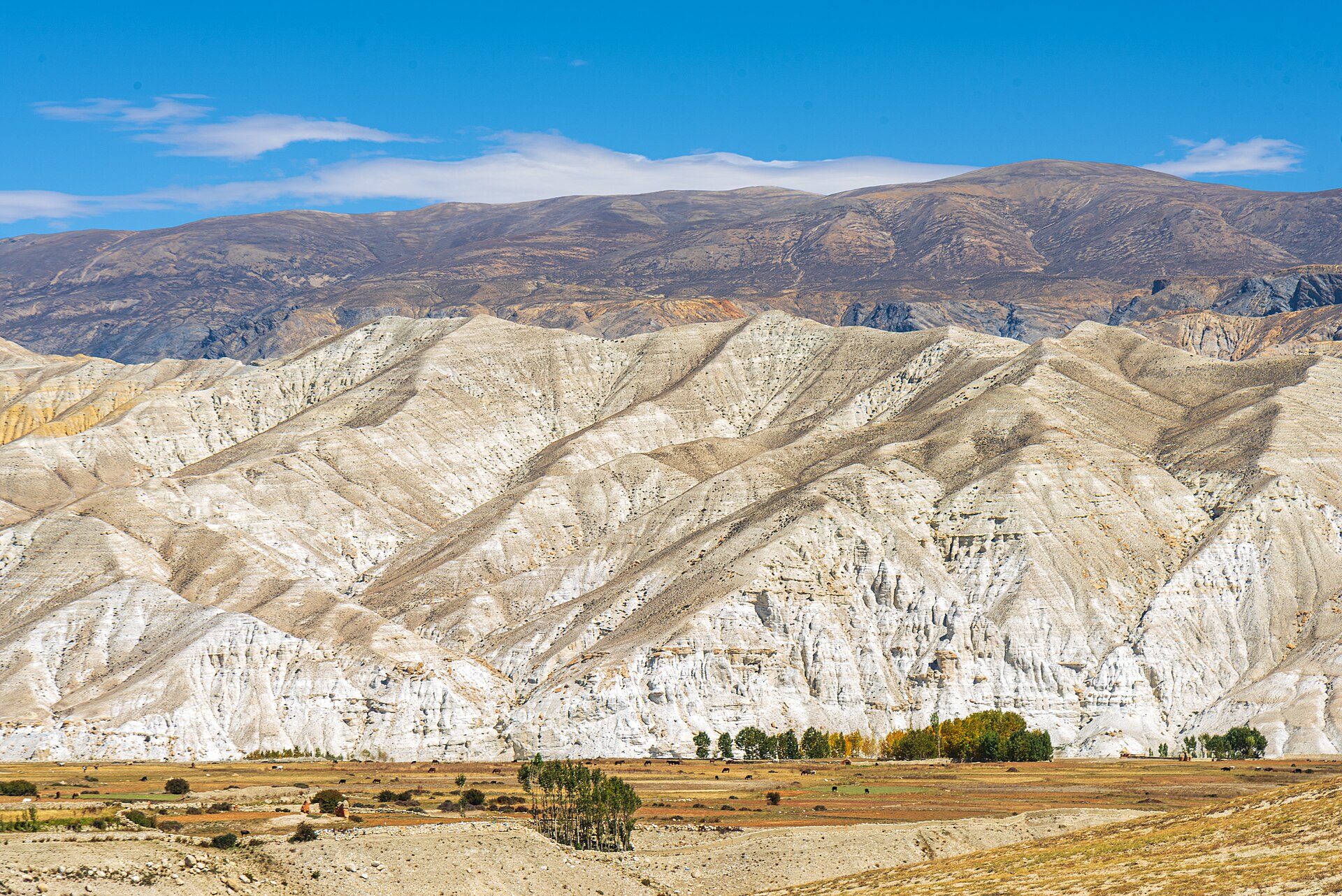
Upper Mustang was an independent kingdom until 2008 and remained closed to outside visitors until 1992, and it still feels like one of the more genuinely remote places accessible by trek in the Himalaya. Sitting in the rain shadow of the Annapurna and Dhaulagiri ranges, the landscape is a high-altitude desert of eroded cliffs, wind-carved canyons, and ochre-red rock formations utterly unlike the lush valleys most trekkers associate with Nepal.
The trek’s destination, Lo Manthang, is Mustang’s walled former royal capital — a compact, still-inhabited medieval city with a royal palace, several significant monasteries, and centuries-old cave complexes carved into nearby cliffs, some still containing preserved manuscripts and artwork. The Tibetan Buddhist culture here has developed with less outside disruption than in Tibet itself, making it a genuinely rare cultural destination.
Mustang’s rain-shadow location gives it one of the widest trekking windows in Nepal — even July and August, monsoon season everywhere else, are viable here, making it one of the few worthwhile Nepal treks to consider outside the standard spring and autumn windows.